SoftMind
A mental health tracking app designed to foster emotional awareness and alleviate daily stress through intuitive, non-intrusive UX.
View Interactive PrototypeProject Overview
SoftMind addresses the "Data Overload" problem in mental health. While many apps track everything, they often increase user anxiety. Our core challenge: How might we empower users to track patterns without the cognitive burden?
6 Weeks
Solo Designer
Figma, Testing
Problem Statement
Many mental health apps overwhelm users with too many features, complex dashboards, and performance metrics. Users seeking emotional support need simplicity, reassurance, and a calm experience that helps them check in and feel supported rather than judged.
The Challenge & Insights
Research showed that 70% of users abandon mental health apps due to notification fatigue and complex dashboards. Individuals with anxiety need a "Safe Space," not a clinical spreadsheet.
- Subtle Tracking: Users prefer guided prompts over detailed text inputs.
- Predictability: Consistency in navigation builds trust for anxious users.
- Language Matters: Using "Relatable Language" instead of clinical jargon.
User Flow
- Onboarding: Gentle introduction to the app
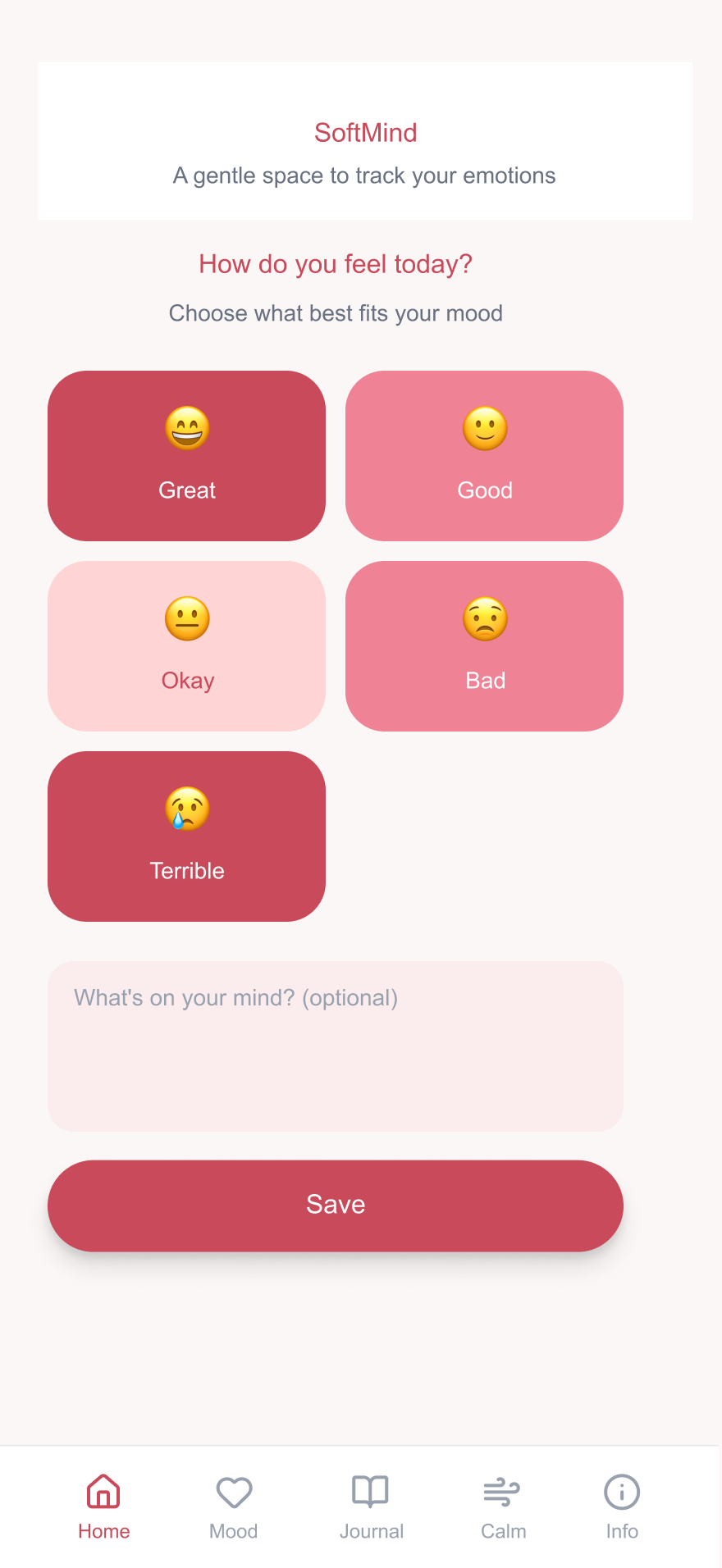
- Mood Check-in: User selects emotional state via icons
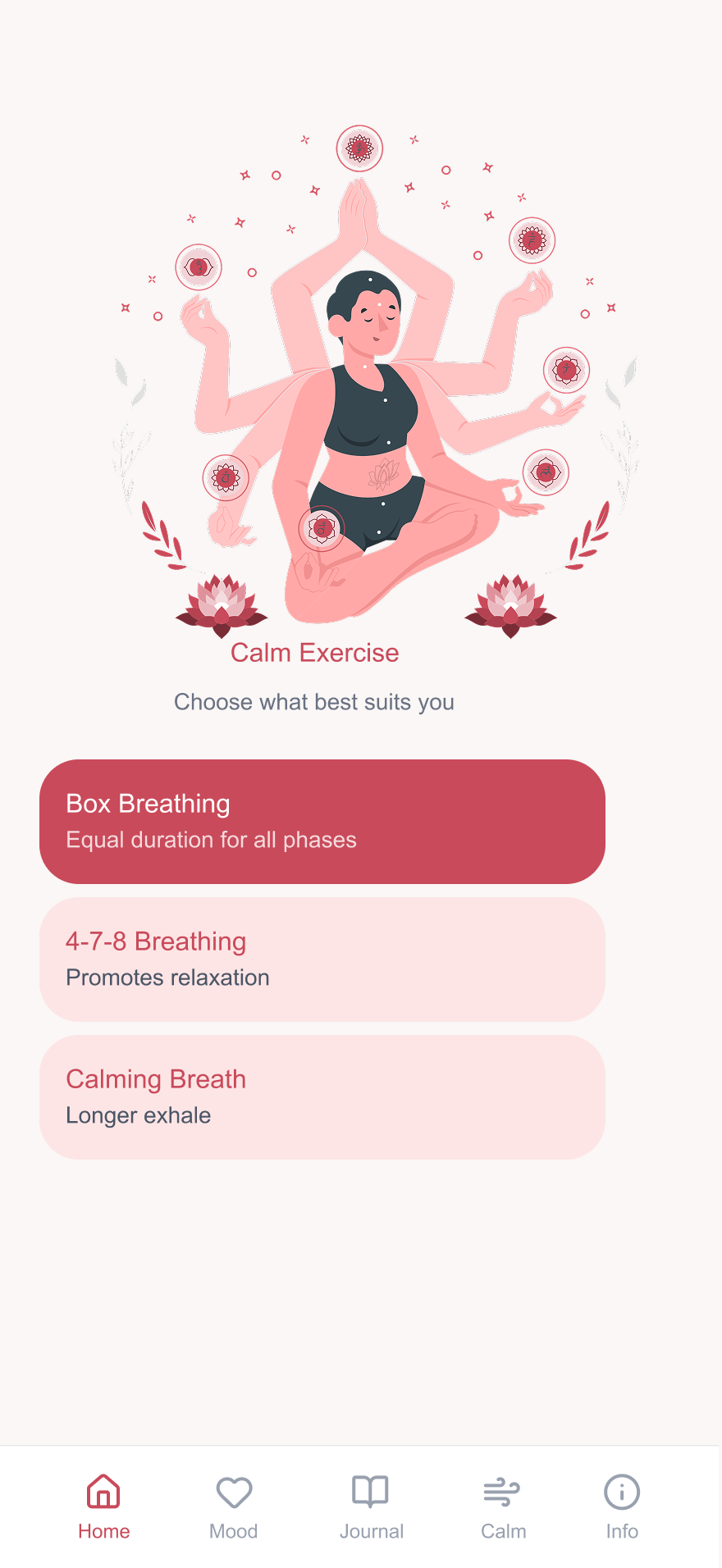
- Calm Exercise: Immediate guided breathing relief
- Mood History: Visualized tracked states over time
- Journal: Optional space for reflection
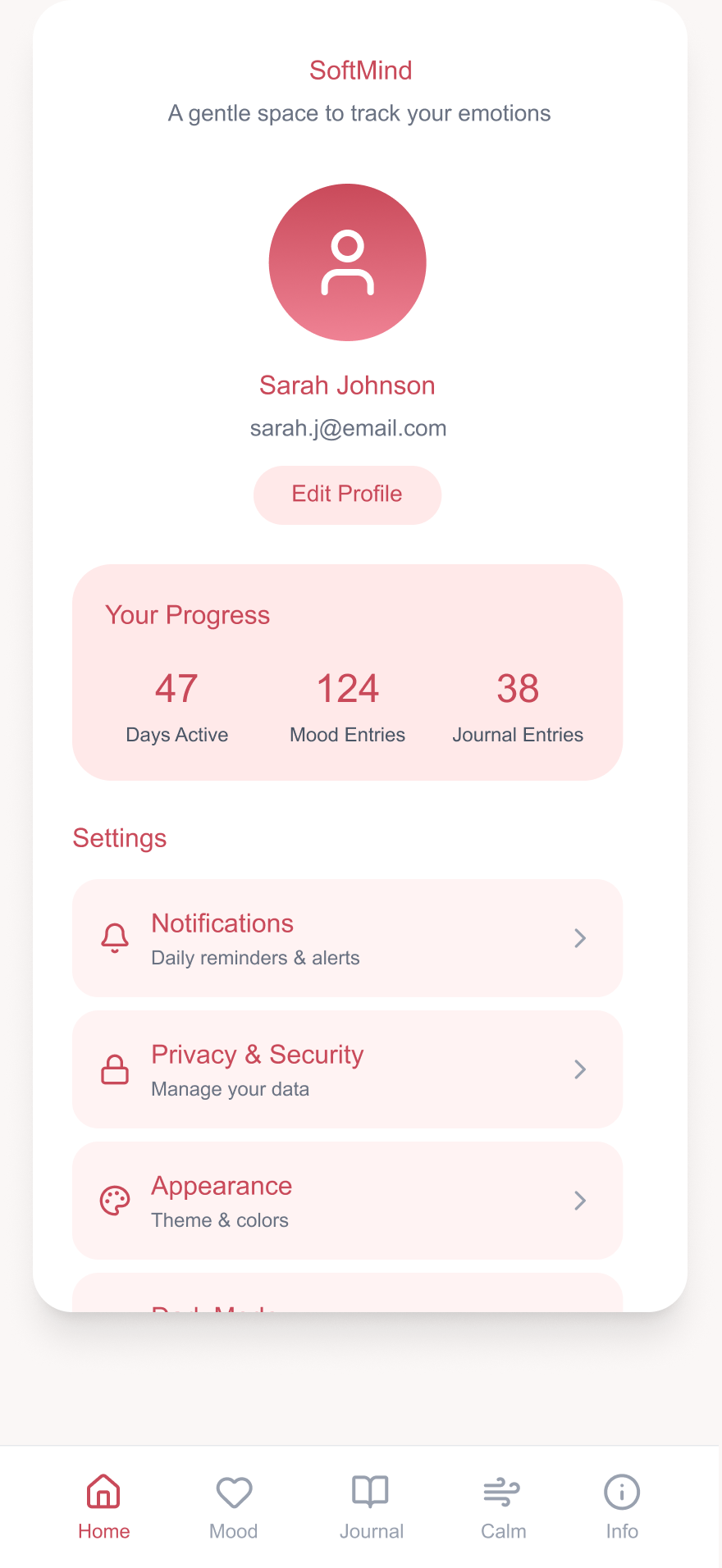
- Profile: Simple settings and progress overview
User Persona: Adam
Adam, 30 – Office Employee
Adam experiences anxiety spikes after long workdays. He struggles with decision-making when tired. He seeks a tool that feels supportive and non-judgmental.
"I want something that calms me down, not tracks every mistake."
Key UX Decisions
- Soft color palette to reduce emotional overload
- Limited mood options to avoid choice paralysis
- Calm exercises positioned after mood check-in for immediate relief
- No analytics dashboard to avoid performance pressure
- Optional Journal to respect varying emotional energy levels
Case Study Focus
SoftMind is a non-clinical mental wellness app concept focused on emotional check-in, guided calm practices, and gentle self-reflection. The design prioritizes emotional safety over analytics, reducing cognitive load for users experiencing stress or anxiety.
Measurable Impact
Through iterative testing, we focused on reducing friction and emotional resistance.
High-Fidelity Interface
Minimalist UI utilizing soft blues and rounded shapes to evoke safety.
Outcome & Learnings
Round 1: Simplified onboarding from 5 steps to 2.
Round 2: Replaced text-heavy prompts with mood icons, boosting engagement by 35%.
Designing for emotional safety requires reducing decision friction and focusing on calm, intentional interactions. SoftMind successfully proved that "Less is More" when designing for emotional regulation.
Next Steps: Integrate passive tracking via wearables and A/B test personalized AI calming suggestions.